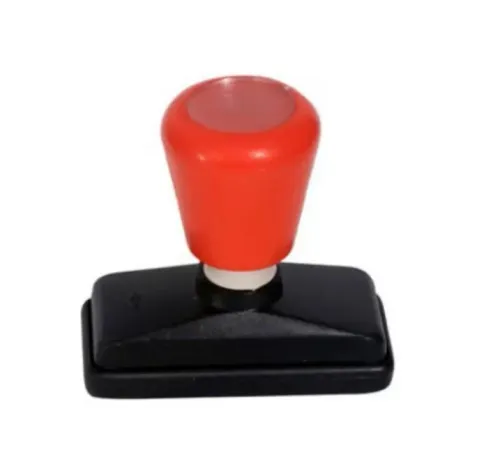

Every office relies on repetitive documentation. Whether it is approving invoices, acknowledging deliveries, validating certificates, or processing official paperwork, stamping remains a routine task across businesses. A Self Inking Stamp simplifies this process by combining speed, consistency, and convenience into one compact tool. Unlike traditional rubber stamps that require a separate ink pad, self-inking models automatically re-ink after every impression, making them ideal for high-frequency use.
Across Delhi, businesses ranging from corporate offices and educational institutions to legal firms and government departments continue to adopt self-inking stamps because they help reduce manual effort while maintaining professional-looking impressions.
Understanding How a Self Inking Stamp Works
A self-inking stamp contains an internal ink pad that automatically rotates into position after each impression. Once the stamp is pressed, the rubber die contacts the paper, and the mechanism immediately re-inks itself before returning to its original position.
This eliminates the need to manually apply ink every time, resulting in cleaner and more consistent stamping.
The mechanism is designed for thousands of impressions before the ink pad requires replacement or re-inking.
Why Offices Prefer Self Inking Stamps
Modern workplaces value efficiency. Small improvements in repetitive tasks can save significant time over weeks and months.
Some practical benefits include:
- Fast stamping without using a separate ink pad
- Uniform impressions on every document
- Reduced mess from excess ink
- Better productivity for administrative staff
- Comfortable handling during continuous use
- Long operational life with replaceable ink pads
These advantages make self-inking stamps suitable for organisations handling hundreds of documents every day.
Common Applications Across Different Industries
Self-inking stamps are widely used because they serve multiple documentation requirements.
Typical applications include:
- Company approval stamps
- Received document stamps
- Paid stamps
- Signature stamps
- Date stamps
- Confidential document markings
- School administrative records
- Hospital documentation
- Warehouse inventory processing
- Banking paperwork
Their versatility allows businesses to standardise documentation without investing in complex equipment.
Choosing the Right Stamp Size
Not every application requires the same stamp dimensions. Selecting the appropriate size depends on the amount of information being printed.
Small stamps are suitable for:
- Initials
- Short text
- Inspection marks
Medium-sized options work well for:
- Company names
- Addresses
- GST information
- Standard office seals
Larger stamps are commonly used for:
- Detailed business information
- Logos
- Multi-line text
- Authorisation statements
Choosing the right size improves readability while preventing overcrowded impressions.
Factors That Affect Stamp Quality
Even a well-designed stamp performs best when properly maintained.
Several factors contribute to crisp impressions:
- High-quality rubber dies
- Suitable ink formulation
- Even stamping pressure
- Smooth paper surfaces
- Proper storage away from excessive heat
Regular cleaning also helps prevent ink buildup that may reduce clarity over time.
When Should an Ink Pad Be Replaced?
Many users continue using worn ink pads long after print quality begins to decline.
Signs that indicate replacement include:
- Faded impressions
- Uneven ink coverage
- Missing characters
- Dry stamping despite sufficient pressure
Replacing the ink pad restores print quality without replacing the entire stamp.
Selecting a Reliable Manufacturer
Businesses purchasing office stamps should evaluate more than just price.
Consider:
- Build quality
- Durability of the stamping mechanism
- Availability of replacement ink pads
- Precision engraving
- Customisation options
- Technical support
Established manufacturers generally provide consistent quality and better long-term value.
Growing Demand in Delhi
Delhi's expanding commercial ecosystem includes thousands of offices, educational institutions, legal firms, manufacturing companies, and service providers that rely on efficient documentation systems. Products such as self-inking stamps continue to remain relevant because they combine simplicity with dependable performance for everyday operations.
Companies like Sun Graphics have contributed to this segment by offering stamp-making solutions and customised stamping products for businesses with varying operational requirements.
Choosing the right self-inking stamp is less about appearance and more about reliability. A well-manufactured stamp helps organisations maintain professional documentation while reducing time spent on repetitive administrative work.
Keywords