


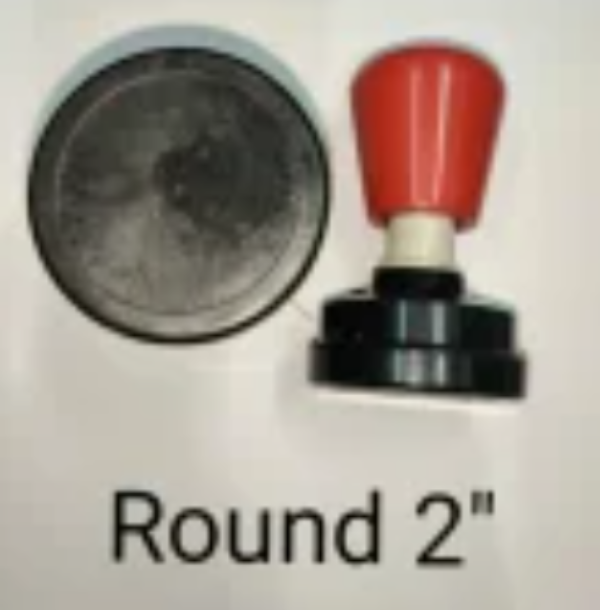
The stamp plate receives much of the attention during production, but the mount attached to it plays an equally practical role in everyday use. A poorly selected Rubber Stamp Handle can make an otherwise well-produced stamp uncomfortable, difficult to align, or unsuitable for frequent stamping.
Stamp manufacturers and office-supply dealers should therefore treat handle selection as part of product quality.
Match the Handle to the Stamp Size
The handle and base should provide appropriate support for the rubber plate.
A very small mount may not support a large impression surface evenly, while an unnecessarily bulky handle can make a compact stamp inconvenient.
Manufacturers should consider both the width and height of the final impression before selecting the mount.
Think About User Comfort
A stamp used occasionally does not create the same ergonomic demands as one used hundreds of times a day.
Accounts teams, warehouse staff, inspection departments, dispatch counters, educational institutions, and government offices may perform repetitive stamping throughout working hours.
A comfortable grip can make these tasks easier.
The shape should allow users to apply reasonably even downward pressure without awkward hand positioning.
Consider Base Stability
A stable base helps transfer pressure across the stamp plate.
Uneven pressure can produce partial impressions, particularly with larger stamps.
The handle should therefore work as a complete mounting system rather than being selected purely for appearance.
Manufacturers should also ensure that the rubber plate is positioned accurately before permanent mounting.
Select Material According to Application
Stamp handles may be produced using different materials and constructions.
The appropriate choice depends on expected usage, size, price segment, durability requirements, and customer preference.
A basic office stamp may prioritise economical construction, while a stamp intended for frequent industrial use may require a more robust mounting solution.
Pay Attention to Alignment
Users need to understand where the impression will land on the page.
A clearly aligned mount helps reduce crooked impressions and misplaced stamping.
This becomes especially important with rectangular address stamps, signature stamps, inspection markings, and designs where orientation matters.
Manufacturers should test the mounted product before delivery.
Keep Inventory Practical
Dealers and stamp producers do not necessarily need every possible handle size in large quantities.
Review historical orders and identify frequently requested stamp dimensions.
Maintaining appropriate stock of commonly used mounts can reduce order turnaround without tying up excessive inventory.
Delhi's large office, institutional, industrial, and commercial customer base can create demand across several stamp sizes, making sensible inventory planning particularly useful for local manufacturers.
Evaluate Supply Consistency
A stamp manufacturer may standardise artwork and production but still face quality variation if mounting components change frequently.
Reliable dimensions and consistent construction make assembly easier and help maintain a predictable finished product.
Sun Graphics serves the stamp-making industry with equipment and related solutions for businesses developing commercial production capabilities.
The right Rubber Stamp Handle should support the impression area, feel comfortable during actual use, maintain alignment, and match the durability expected by the customer. Treating the handle as a functional component rather than a finishing accessory can improve both stamp performance and the user's overall experience.