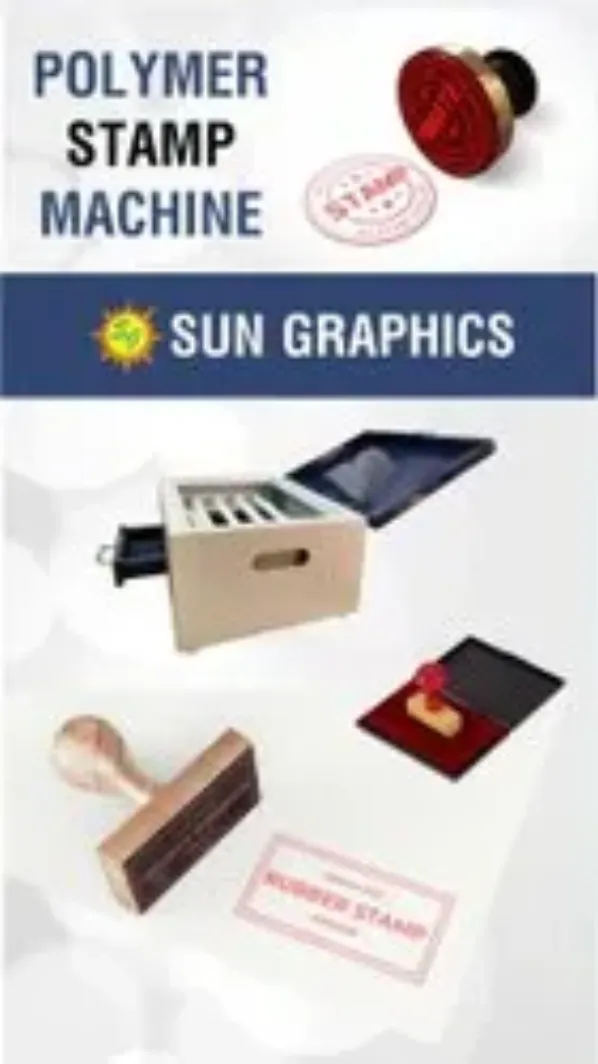
Custom rubber stamps continue to play an important role in business documentation despite increasing digitalisation. One technology that remains widely used is the Polymer Stamp Machine, valued for its ability to produce accurate stamp designs with dependable consistency.
For businesses planning to manufacture stamps or expand existing production capabilities, understanding polymer technology provides valuable insight into its practical applications.
How Polymer Stamp Manufacturing Works
Polymer stamp production uses a light-sensitive liquid polymer.
The process generally involves:
- Preparing digital artwork
- Printing a negative film
- Exposing the polymer under ultraviolet light
- Washing away uncured material
- Drying the plate
- Final curing before assembly
The finished polymer plate is then mounted onto the stamp body.
This manufacturing method produces detailed stamp surfaces suitable for text, logos, and custom graphics.
Advantages of Polymer Technology
Polymer-based production offers several operational benefits.
These include:
- Good reproduction of fine details
- Suitable for customised designs
- Reliable production consistency
- Multiple stamp sizes
- Cost-effective manufacturing
- Flexible production for small or large batches
These characteristics have made polymer technology popular among stamp manufacturers worldwide.
Applications Across Different Customer Segments
Polymer stamps serve numerous industries.
Typical customers include:
- Offices
- Schools
- Colleges
- Banks
- Hospitals
- Government organisations
- Chartered accountants
- Architects
- Notaries
- Retail businesses
Because designs can be customised easily, manufacturers can meet diverse client requirements.
Tips for Better Production Results
Consistent manufacturing depends on following proper production practices.
Recommended approaches include:
- Use high-resolution artwork.
- Maintain accurate exposure times.
- Clean equipment regularly.
- Store polymer materials correctly.
- Inspect every finished stamp before delivery.
- Replace worn production accessories when required.
These practices improve product quality while reducing material wastage.
Common Questions from New Manufacturers
Is polymer suitable for logo stamps?
Yes. Polymer technology reproduces logos and fine artwork with excellent detail when prepared correctly.
Can one machine produce different stamp sizes?
Most machines accommodate multiple stamp dimensions depending on the exposure unit and accessories.
Is specialised training required?
Basic operational training helps ensure consistent production quality and safe machine handling.
Choosing the Right Equipment Supplier
Purchasing industrial equipment involves more than comparing prices.
Businesses should evaluate:
- Machine reliability
- Technical support
- Spare part availability
- Production consistency
- Warranty coverage
- Future scalability
Selecting dependable equipment contributes to smoother day-to-day operations.
Demand Across Delhi's Business Community
Delhi's growing commercial environment continues to generate demand for customised office products across industries. Printing businesses, stationery suppliers, educational institutions, and corporate organisations frequently require professionally manufactured stamps for everyday documentation.
Manufacturers such as Sun Graphics support this market with machinery designed for stamp production and related printing solutions suited to businesses of different sizes.
Understanding how polymer stamp machines operate allows entrepreneurs to select technology that matches their production requirements while delivering consistent quality to customers over the long term.
Keywords