The right machine depends on more than its tube count or advertised flash duration. By matching the exposure area, cycle capacity, material compatibility, quality controls, running costs, and service support to your actual orders, you can avoid buying a machine that creates a new bottleneck.
Key takeaways
- Size capacity for peak finished-plate demand, not average daily orders.
- Count loading, exposure, cooling, polymer removal, cutting, mounting, and inspection time.
- Match exposure area to your common stamp sizes and largest plate format.
- Verify installation, operator training, spare parts, and service response before purchase.
Match machine capacity to your order pattern
Match flash stamp machine capacity to your peak finished-plate requirement, not your daily average. A realistic rate includes loading, film alignment, exposure, cooling or interlock delay, polymer removal, cutting, mounting, and inspection. A longer flash can still win if the machine exposes more plates at once.
| Configuration | Bottleneck addressed | Best fit |
|---|---|---|
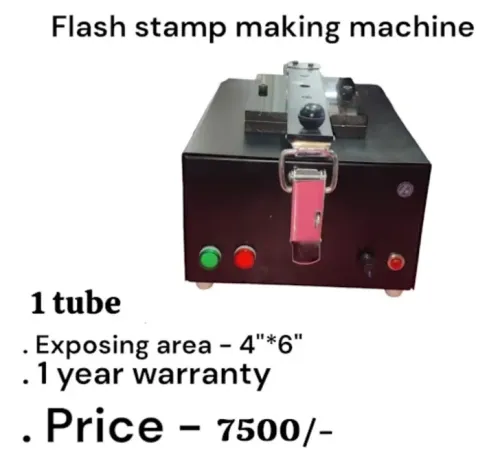
| One-tube flash stamp machine | Lowest entry capacity and one exposure station | One operator, small daily orders, and standard turnaround |
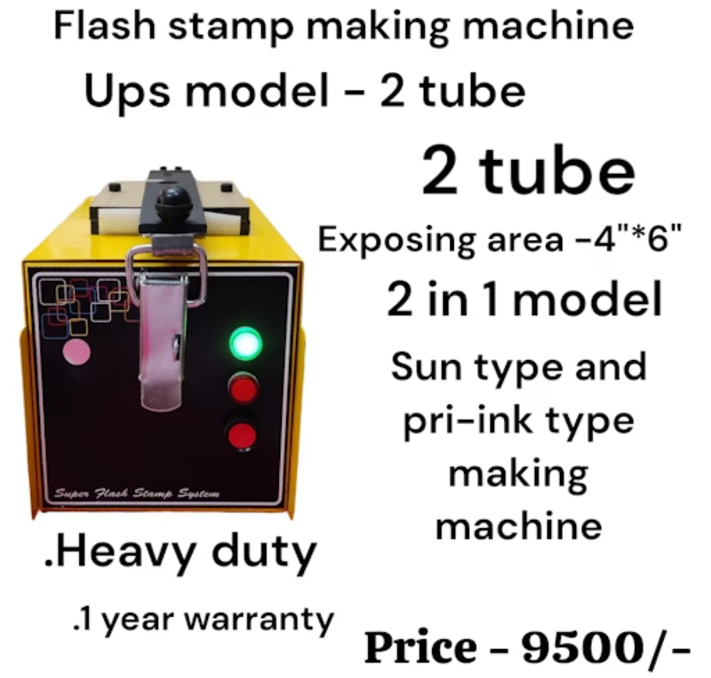
| Two-tube flash stamp machine | More exposure output without a large footprint | Growing orders, moderate peaks, or one operator who must clear batches quickly |
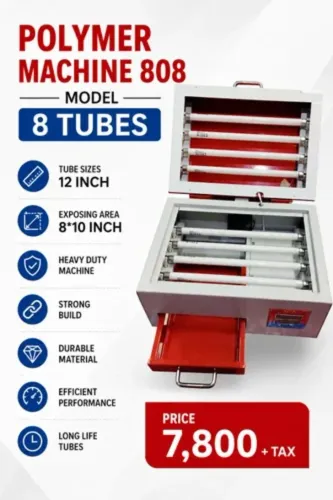
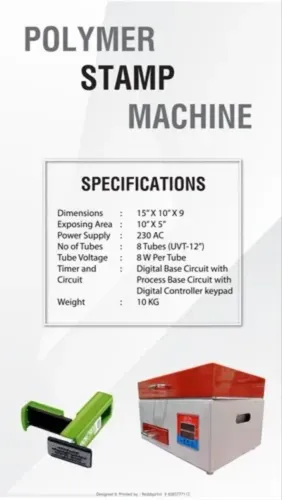
| Eight-tube flash stamp machine | High simultaneous exposure capacity | Multiple operators, large peaks, and same-day or next-day promises |
| Semi-automatic machine | Reduces manual loading and timing errors | A team seeking repeatability while retaining hands-on control |
| Automatic machine | Removes repeated loading and cycle-management tasks | Sustained high volume where operator time is the main bottleneck |
| 2-in-1 machine | Combines two production functions in one unit | Limited floor space or varied work that would otherwise need separate equipment |
Use your busiest day, largest plate mix, and promised dispatch time when comparing models. If one operator must load, trim, mount, and test every plate, the advertised flash duration will overstate output.
Confirm the maximum single plate and simultaneous plate count. Usable capacity means the largest finished imprint area exposed uniformly in one cycle, with the required border—not the external platen size. A large plate requiring sectional exposure can destroy your turnaround calculation. The machine must also suit microporous flash polymer, not vulcanized rubber sheets.
Understand the production workflow and exposure controls
Start with artwork preparation, then create a dense black film negative, align it against the microporous flash polymer, expose it, and finish the plate before testing the impression. The flash stamp production process fails when the machine is designed for laser-rubber engraving or ordinary vulcanized rubber instead of flash polymer.
- Print the reversed artwork on transparent film. Opaque black areas protect pores that must remain ink-permeable.
- Place foam and flash rubber flat against the film and platen. Gaps or wrinkles create weak, broken characters.
- Set the material-specific exposure time and lamp intensity, then run the flash cycle.
- Remove the exposed polymer, trim the plate, apply adhesive or sealant, and mount it in the selected stamp body.
- Check orientation, add ink, and make test impressions on the paper stock your customers use.
| Control | What to verify | Failure caused by error |
|---|---|---|
| Exposure time | Validated setting for the polymer brand and thickness | Under-flashing leaves unwanted ink flow; over-flashing closes image pores |
| Lamp intensity | Stable output, not just the timer reading | A weak lamp produces pale or incomplete characters |
| Tube spacing | Even coverage across the plate | Uneven spacing creates dark and light sections |
| Heat and cooling | Temperature control and interlock delay | Heat shifts exposure and distorts fine details |
| Platen contact | Firm, uniform film-to-polymer contact | Air gaps blur edges |
Exposure settings do not transfer reliably between polymer brands. Ask for a setting chart and repeatability test; confirm that the package includes cutters, mounting materials, plate holders, and format templates. A clean impression proves the complete workflow, not merely a successful flash.
Check exposure area, image quality, and common stamp sizes
A 4 × 6 inch exposure area is useful only when it exposes that entire finished plate uniformly. Measure the maximum imprint area you sell, not the machine’s outside platen, and confirm the required border, usable margins, and whether one cycle handles one plate or several.
A plate larger than the usable field may require sectional exposure, which creates alignment risk.
Check your actual order mix against the machine’s format limits:
- Address stamp: confirm the full address, postcode, logo, and border fit without shrinking the type.
- Company seal stamp: test the outer ring, fine lettering, and any reversed text inside the seal.
- Small business or date stamps: check whether narrow lines and small characters remain open after inking.
- Multiple plates: verify the spacing between plates and whether every position receives equal exposure.
Do not choose on a stated resolution or flash duration alone. Request an exposure sample using the smallest character size, thinnest line, and densest artwork you sell. Inspect closed counters in letters such as A, R, and e, the edges of fine lines, reversed text, and ink bleed after several impressions.
Film optical density, polymer formulation, exposure calibration, ink viscosity, and mounting all affect the result.
Also confirm what happens after exposure: cutters, plate holders, mounting materials, sealing supplies, and format templates should match your stamp bodies. A clean plate is not a finished stamp until it is trimmed, mounted, oriented, and tested.
Compare flash stamping with other production methods and calculate the real cost
Flash production wins on short runs, repeat orders, fine text, and same-day turnaround when you expose several plates together. The right flash stamp versus polymer stamp comparison is not only plate price: flash avoids polymer washout and drying, while polymer remains attractive for deep relief or unusual plate thicknesses.
| Method | Best fit | Main limitation |
|---|---|---|
| Flash polymer | Multiple clean text or logo stamps, rapid repeat production, compact plates | Needs microporous polymer and compatible ink; re-inking is limited |
| Laser-engraved rubber | Durable impressions, large solid areas, heat or chemical exposure | Engraving time, smoke extraction, and rubber waste add cost |
| Vulcanised rubber stamp | Long service life and established rubber workflows | Requires a different process; a flash machine cannot expose ordinary vulcanised rubber sheets |
| Hand-set stamp | One-off dates, numbers, or basic office text | Slow composition, limited artwork, and inconsistent alignment |
Calculate stamp production cost per finished stamp, not per exposure. Include:
- Polymer, film, foam, adhesive, plate holder, ink, and stamp body
- Operator minutes for loading, alignment, exposure, cooling, trimming, mounting, assembly, and inspection
- Machine depreciation, electricity, maintenance, rejected plates, and consumables
- Initial ink charge, approved refill bottle, storage losses, and re-inking failures
Use total monthly cost divided by sellable stamps. A longer flash time can still cost less when a larger usable exposure area produces more plates per cycle; measure finished plates per hour, not the advertised flash duration. Confirm that cutting, mounting materials, templates, and compatible ink are included, or add them to the purchase calculation.
Validate the machine, installation, and after-sales support before purchase
A signed acceptance test is worth more than a favourable flash stamp machine specification. Run the supplier’s machine with your artwork, polymer, film, and approved ink before payment; reject results that show blocked fine lines, uneven exposure, slow drying, feathering, or poor re-inking.
1. Produce several stamp sizes, including the smallest format you sell. Inspect the plate across the platen for consistent exposure, then trim, seal or mount it, fit it to the stamp body, and check orientation and impression quality.
2. Repeat the same exposure after several cycles. Confirm the timer, cycle counter, thermal protection, and lamp-replacement guidance; ask how the supplier verifies output when lamp ageing or heat causes drift.
3. Read the nameplate and installation requirements. For a Delhi NCR site, confirm compatibility with 230 V 50 Hz, earthing, plug format, voltage tolerance, and protection against power fluctuations. A step-down transformer does not confirm frequency or preserve warranty cover.
4. Ask which polymer brands and thicknesses have validated settings. Confirm the approved ink chemistry, film density, foam, flash rubber, adhesive, cutters, plate holders, and format templates included in the package. Ordinary stamp-pad, pigment, and solvent-rich inks are not interchangeable.
5. Put service terms in writing: lamp and flash-tube stock, exposure-control-board replacement, local calibration, spare-part lead time, response time, warranty exclusions, and a documented field-service procedure. Sun Graphics, for example, should state who performs calibration and how production continues during a failed lamp assembly.
Get a signed commissioning report with test impressions, electrical readings, consumable settings, and the names of service contacts. Without it, a low purchase price can become weeks of lost production.
Related products
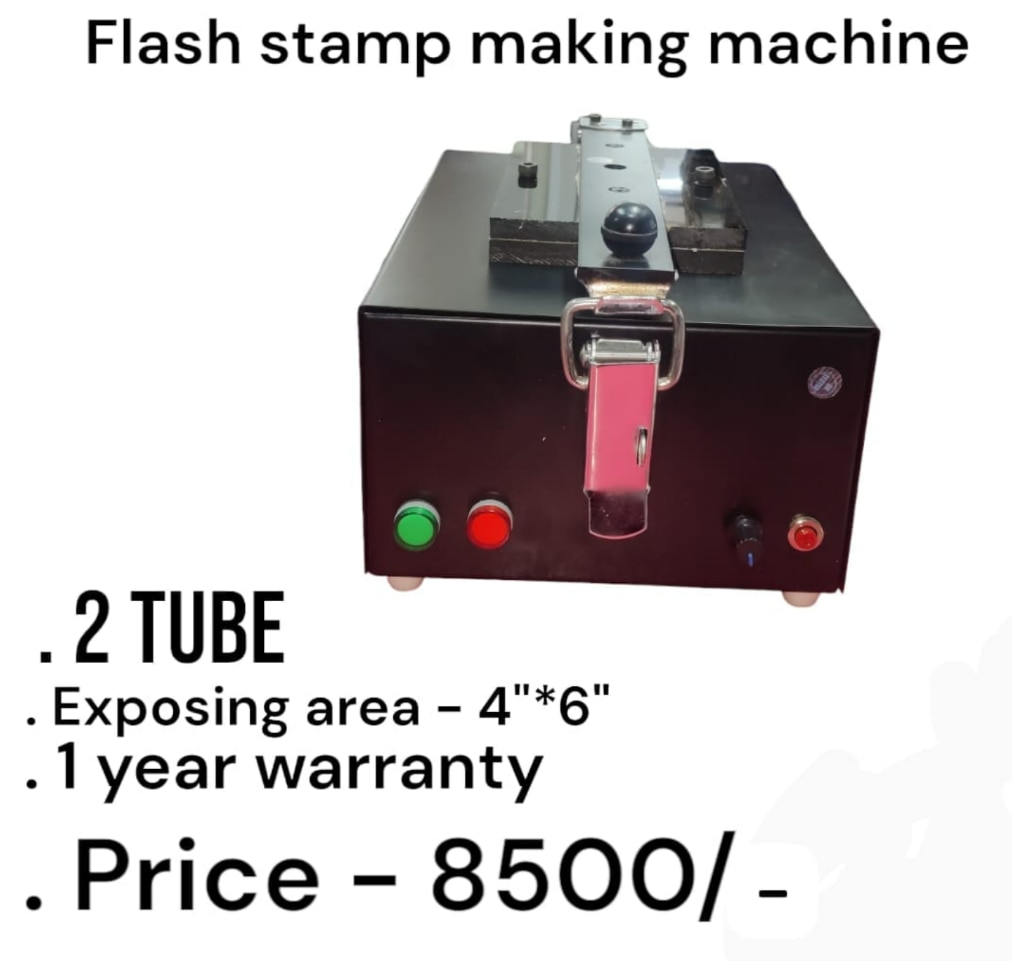 | Flash Stamp Making Machine ₹8500 2 Tube Model The 2 Tube Flash Stamp Making Machine is a reliable and efficient solution for manufacturing high-quality flash stamps quickly and... View product → |
 | Flash Stamp Making Machine Automatic (2 in 1 Model) ₹13500 Flash Stamp Making Machine Automatic (2 in 1 Model) – Heavy Duty Automatic Flash Stamp Making Machine – 2 in 1 Model The Automatic Flash Stamp Making... View product → |
Frequently asked questions
How should you match flash stamp machine capacity to your order pattern?
Calculate peak finished-plate demand and include every production step: loading, film alignment, exposure, cooling or interlock delay, polymer removal, cutting, mounting, and inspection. A machine exposing several plates at once can outperform a faster single-plate model.
Which exposure controls and workflow features should you compare?
Check exposure-time adjustment, interlock operation, loading access, cooling requirements, polymer removal steps, and how easily operators can repeat a confirmed setting.
How do exposure area and image quality affect machine choice?
Choose an exposure area that fits your common stamp sizes and largest planned plate. Compare edge sharpness, fine text reproduction, solid-fill consistency, and results across repeated plates.
How can you compare flash stamping with other production methods?
Compare equipment cost with consumables, labour time, setup time, waste, plate capacity, finishing work, and the order volumes at which each method remains economical.
What should you validate before buying a flash stamp machine?
Request a live demonstration using your artwork and stamp sizes, then confirm installation, operator training, warranty terms, spare-part availability, troubleshooting support, and service response times.
Related products
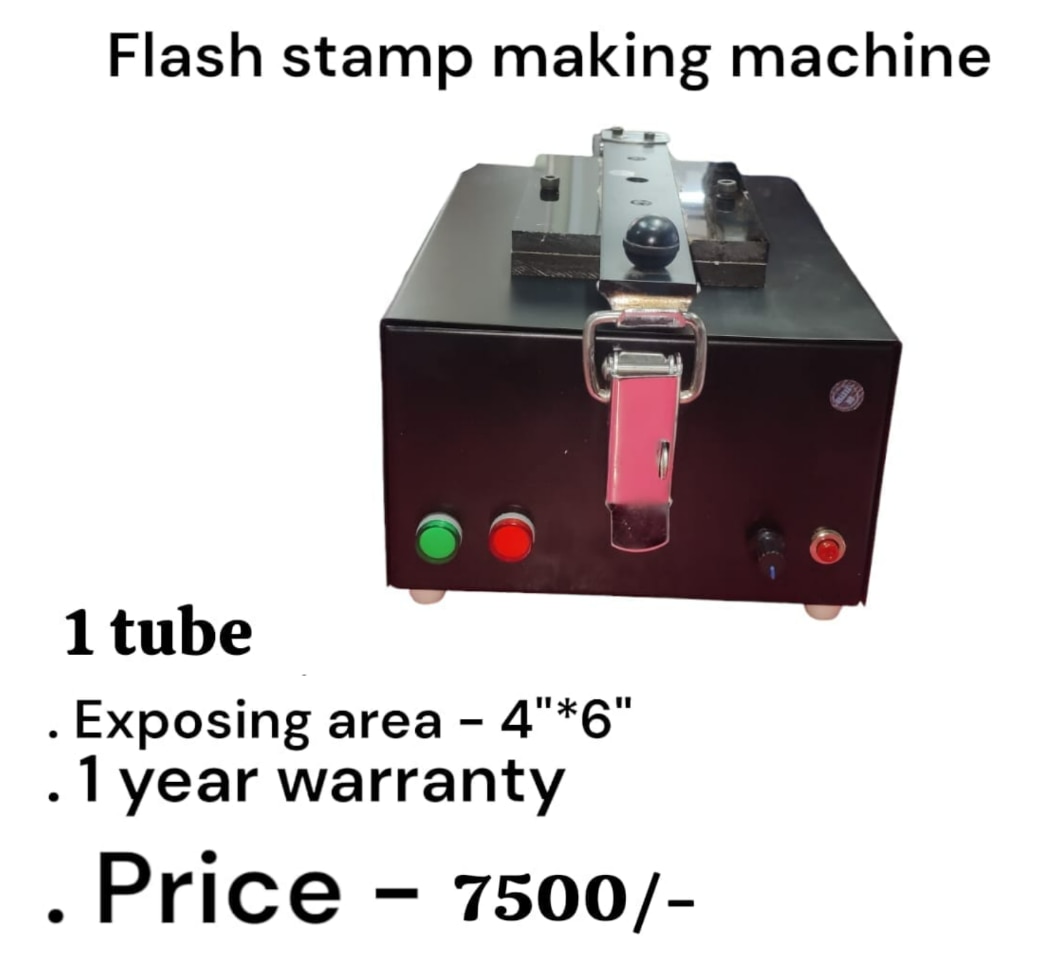 | Flash Stamp Making Machine Flash Stamp Making Machine 1 Tube Model ₹7500 Flash Stamp Making Machine (1 Tube) – Product Description Flash Stamp Making Machine – 1 Tube Model The 1 Tube Flash Stamp Making Machine is an... View product → |
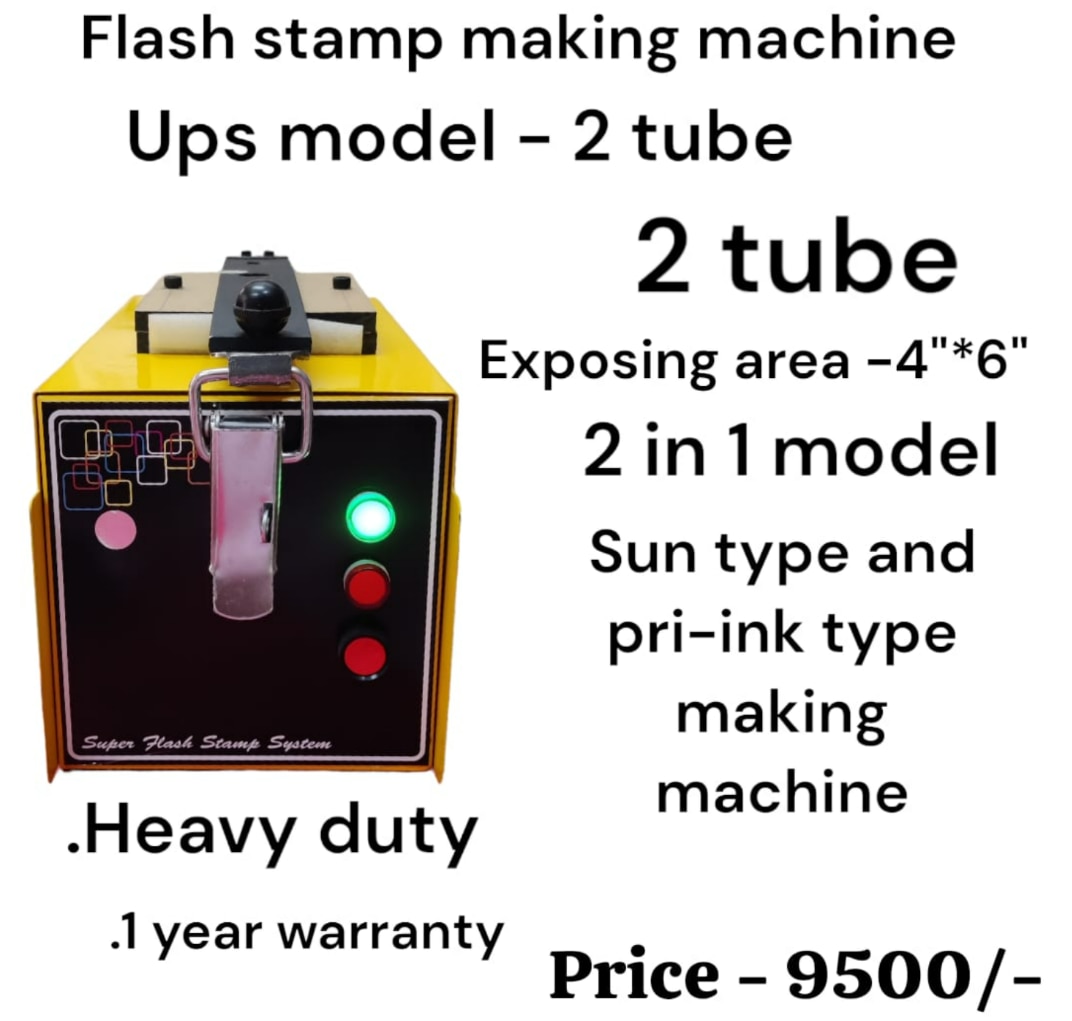 | Flash Stamp Making Machine Flash Stamp Making Machine (UPS Model – 2 Tube) ₹9500 Flash Stamp Making Machine (UPS Model – 2 Tube) Specification Details Product Name Flash Stamp Making Machine Model UPS Model – 2 Tube Type 2-in-1... View product → |
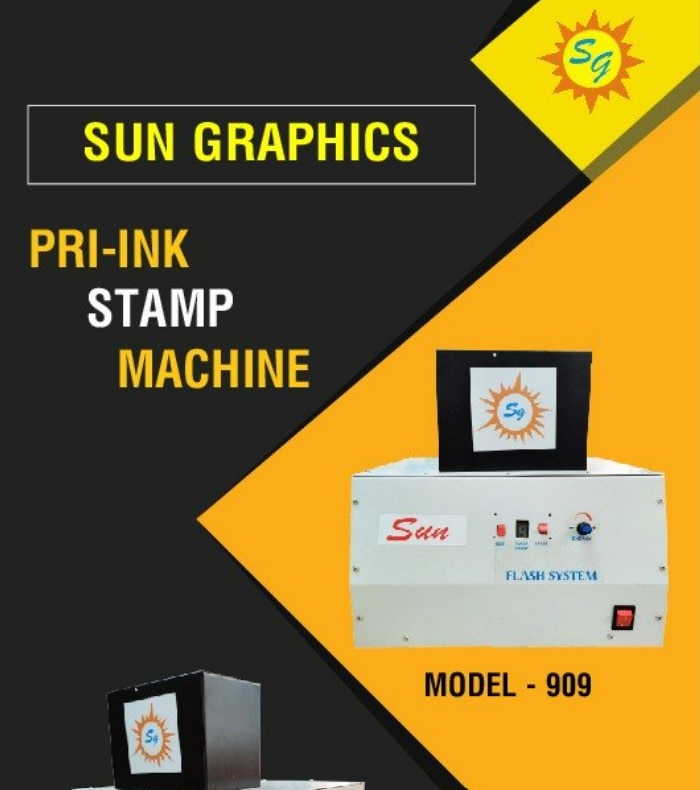 | Pre Ink Stamp Machine ₹13500 Sun Graphics is a supplier and dealer of Pre Ink Stamp Machines and flash stamp making systems in Delhi. View product → |
 | Rubber Stamp Making Machin ₹7800 inimum Order Quantity: 1 Piece Product Brochure Machine Type Rubber Stamping Machine Automation Grade Semi-Automatic Usage/Application STAMP MAKING... View product → |