

Office stamps are used repeatedly in daily operations, yet many businesses overlook proper maintenance until performance problems begin appearing.
Across Delhi, offices handling invoices, courier paperwork, approvals, and administrative records often experience issues such as fading impressions, ink leakage, and damaged stamp surfaces.
Most of these problems can be reduced through proper handling and maintenance practices.
Why Stamp Maintenance Matters
A poorly maintained stamp affects:
- Document readability
- Workflow speed
- Professional presentation
- Administrative accuracy
Employees may need to repeat impressions multiple times, slowing routine office work.
Regular maintenance helps preserve impression quality while extending operational life.
Common Problems Businesses Face
The most frequent stamp-related issues include:
- Dry ink surfaces
- Smudged impressions
- Broken handles
- Uneven stamping
- Ink leakage
- Cracked rubber dies
Many of these problems develop gradually because of improper storage or incompatible refill products.
Use the Correct Refill Ink
Different stamp systems require different ink formulations.
Using unsuitable ink may cause:
- Surface clogging
- Poor absorption
- Smearing
- Reduced impression clarity
Pre ink stamp systems especially require compatible refill products.
Businesses should always verify refill recommendations before purchasing replacement ink.
Avoid Excessive Force During Usage
Applying unnecessary pressure can damage internal mechanisms.
This is common in high-volume office environments where employees stamp rapidly throughout the day.
Proper stamping technique usually requires:
- Balanced pressure
- Flat surface placement
- Controlled movement
Gentle handling improves long-term durability.
Proper Storage Improves Lifespan
Environmental conditions affect stamp performance significantly.
Stamps should be stored away from:
- Direct sunlight
- Excessive heat
- Dust accumulation
- Moisture exposure
Poor storage often leads to faster ink drying and rubber deterioration.
Clean the Stamp Surface Periodically
Dust and paper particles can collect on stamp surfaces over time.
Simple cleaning helps maintain:
- Impression sharpness
- Ink flow consistency
- Surface hygiene
Soft cleaning methods should be used to avoid damaging detailed engraving areas.
Replace Ink Before Complete Drying
Waiting until impressions disappear completely may create uneven re-inking problems.
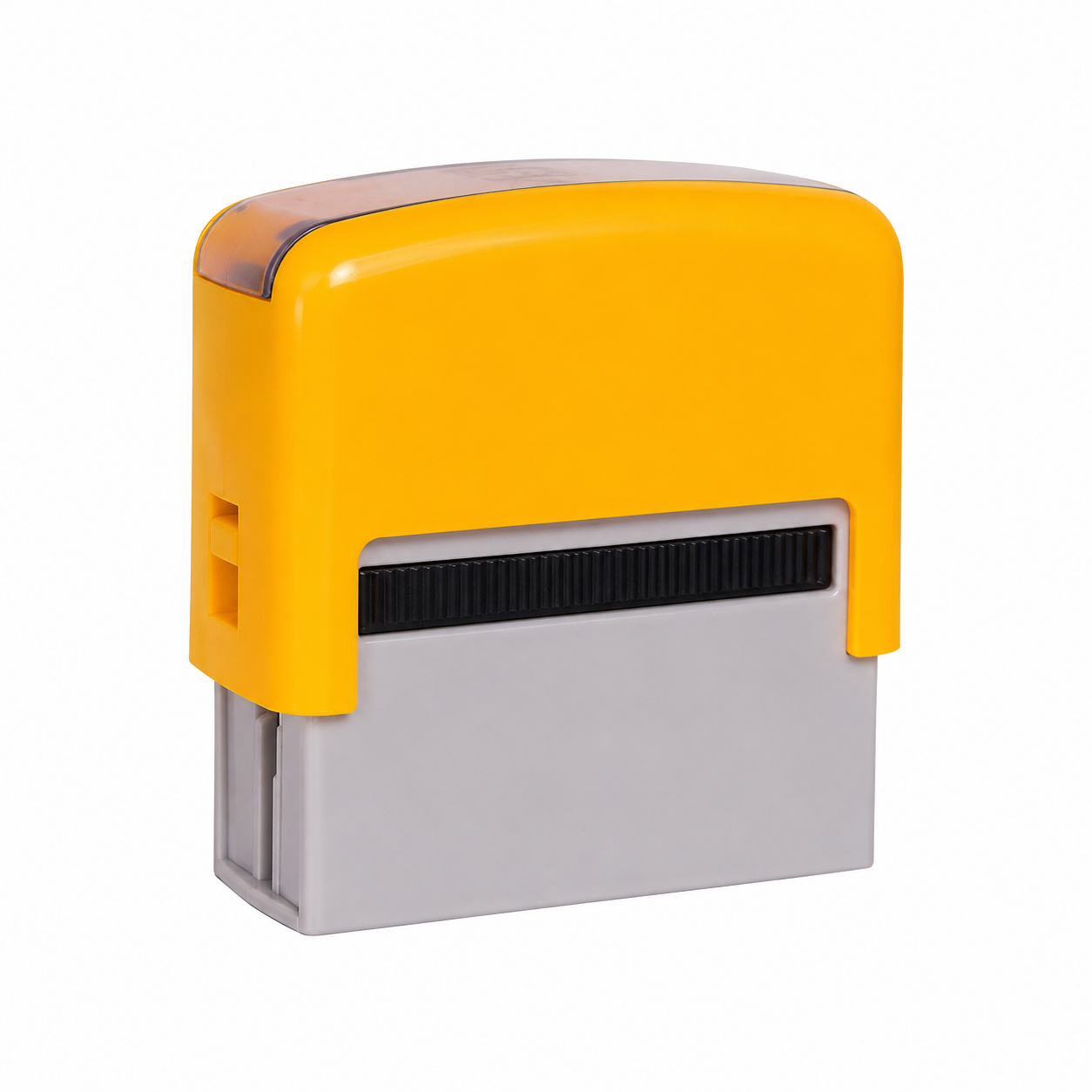
Businesses using self inking stamp systems regularly should monitor impression quality and refill early when fading begins.
Consistent maintenance prevents sudden workflow interruptions.
Rotate High-Usage Stamps When Possible
Large offices often rely heavily on one or two frequently used stamps.
Using backup stamps during peak operational periods can reduce excessive wear on individual units.
This approach is especially useful in:
- Billing departments
- Logistics offices
- Government documentation centers
- Educational institutions
Choose Durable Stamp Materials Initially
Maintenance becomes easier when the original stamp quality is reliable.
Strong materials improve resistance against:
- Cracking
- Alignment failures
- Mechanical wear
- Rubber distortion
Businesses often reduce long-term maintenance costs by selecting better-quality products from experienced manufacturers.
Sun Graphics manufactures customized office stamps, pre ink stamps, and heavy-duty stamping solutions for businesses in Delhi requiring reliable long-term performance in daily documentation work.
Final Maintenance Checklist
Businesses can improve stamp longevity by:
- Using proper refill ink
- Avoiding excessive pressure
- Cleaning surfaces regularly
- Storing stamps correctly
- Monitoring impression quality
- Refilling before complete drying
- Purchasing durable models initially
Small maintenance habits significantly improve operational consistency while reducing replacement frequency and documentation issues over time.