

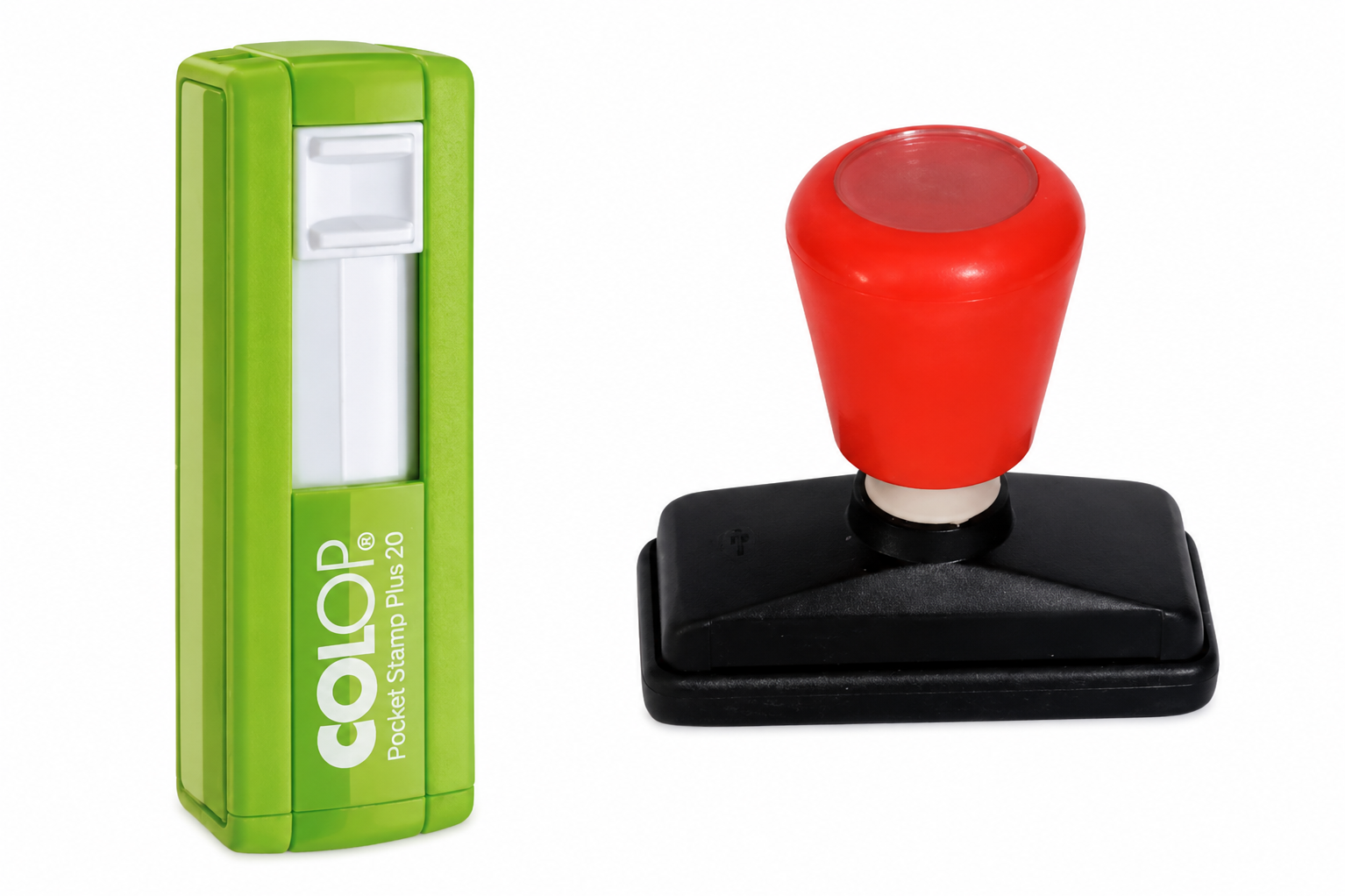
Businesses ordering office stamps often face one common question: should they choose a self inking stamp or a pre ink stamp?
Both options are widely used across Delhi in offices, schools, CA firms, government departments, and commercial establishments. However, each type serves slightly different purposes.
Understanding the practical differences helps businesses select the right solution based on usage patterns, documentation needs, and impression quality expectations.
How a Self Inking Stamp Works
A self inking stamp contains an internal ink pad that automatically re-inks the rubber die after every press.
This design supports fast and repetitive stamping.
These stamps are commonly used for:
- Invoice processing
- Courier documentation
- Attendance verification
- Office approvals
- Dispatch records
They are especially useful in environments where stamping frequency is high.
How a Pre Ink Stamp Works
A pre ink stamp stores ink directly inside the stamp material rather than using a separate pad mechanism.
This creates sharper impressions with greater detail.
Pre ink stamps are commonly preferred for:
- Professional documentation
- Logo stamping
- Legal paperwork
- Compact text layouts
- Premium presentation
The impressions generally appear cleaner and more refined.
Impression Quality Comparison
When clarity is the top priority, pre ink stamps usually produce more detailed results.
Fine text and logos appear sharper because the ink flow remains controlled.
Self inking stamps, however, perform very well for standard office applications where speed matters more than ultra-fine detailing.
For businesses processing hundreds of documents daily, both options remain practical depending on department requirements.
Speed and Workflow Efficiency
Self inking stamps are often faster for repetitive usage.
The pressing mechanism is designed for quick operation, making them suitable for:
- Warehouses
- Billing counters
- Government departments
- Administrative offices
Pre ink stamps also operate efficiently, but some users prefer self inking mechanisms for extremely high-frequency workflows.
Maintenance Requirements
Both stamp types require periodic refilling, but the maintenance process differs.
Self inking stamps usually allow:
- Easy pad replacement
- Faster re-inking
- Simpler maintenance
Pre ink stamps often require:
- Controlled ink refilling
- Specific refill quantities
- Careful storage
Using incorrect ink can affect impression quality in both cases.
Durability and Usage Life
Durability depends on manufacturing quality, usage frequency, and maintenance.
Heavy office usage in Delhi often requires strong casing materials and reliable internal mechanisms.
High-quality stamps can deliver thousands of impressions before requiring maintenance.
Which Option Is Better for Logo Stamps?
Businesses looking for customized logo stamp solutions usually prefer pre ink technology because it handles intricate designs more effectively.
Branding details remain clearer and more visually consistent.
However, larger logo stamps for industrial packaging or repetitive approvals may still perform efficiently using self inking systems.
Cost Considerations
Pricing varies depending on:
- Stamp size
- Material quality
- Brand
- Customization level
- Mechanism type
Pre ink stamps sometimes cost slightly more because of their finer impression capability.
Businesses should evaluate long-term usability rather than focusing only on initial pricing.
Best Use Cases for Each Type
Self inking stamp applications:
- Daily office stamping
- Frequent invoice work
- High-volume paperwork
- Dispatch departments
- Reception counters
Pre ink stamp applications:
- Legal documentation
- Professional branding
- Compact detailed layouts
- Signature stamps
- Premium business presentation
Sun Graphics manufactures customized stamp solutions for businesses, consultants, educational institutions, and commercial offices across Delhi requiring both self inking and pre ink stamp systems.
Final Decision Factors
Before choosing a stamp type, businesses should evaluate:
- Daily usage volume
- Detail complexity
- Logo requirements
- Maintenance preference
- Workspace conditions
- Long-term refill support
The best option depends less on popularity and more on practical workflow requirements.
Businesses that understand their actual documentation needs usually make better long-term stamp investments.