

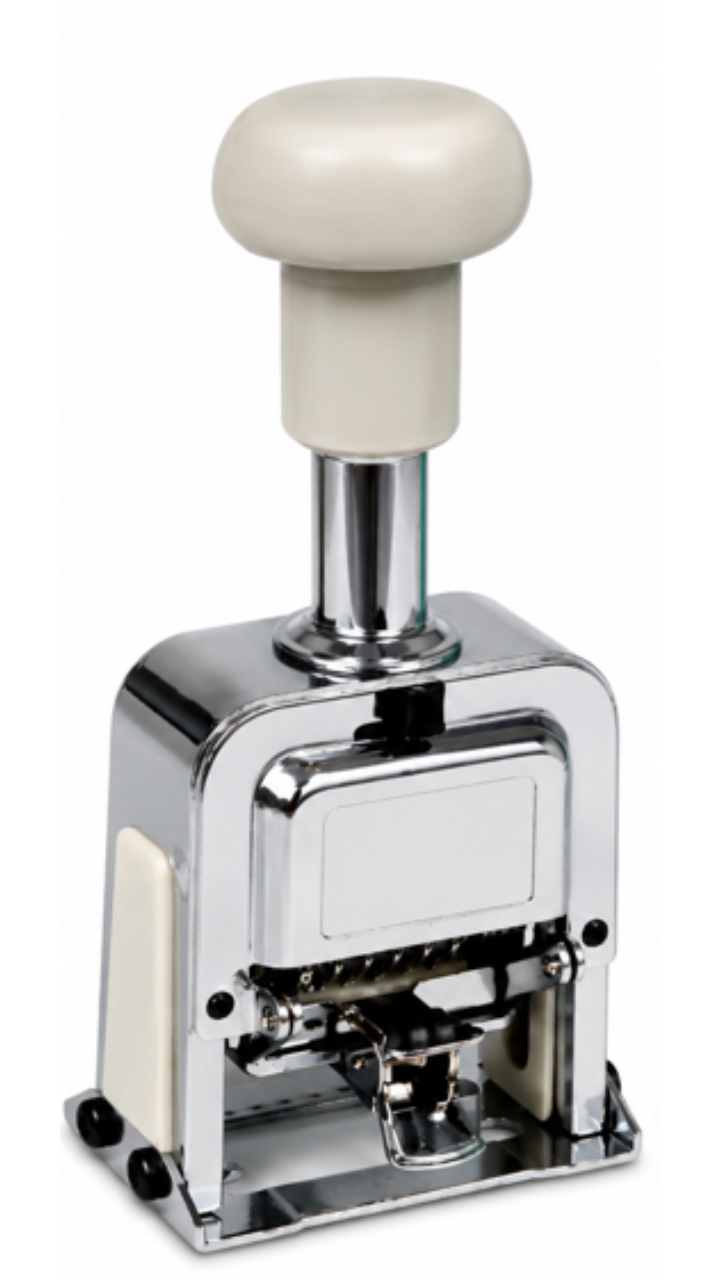
Not every office stamp is designed for high-volume usage. Many businesses initially purchase standard stamp models only to discover they wear out quickly under continuous daily operation.
In Delhi’s busy commercial environment, warehouses, transport offices, billing departments, and administrative centers often process hundreds of documents every day. Under these conditions, a heavy duty stamp can perform far more efficiently than lightweight alternatives.
Understanding the warning signs helps businesses choose better long-term stamping solutions.
Frequent Stamping Throughout the Day
One of the clearest signs is high usage frequency.
If employees stamp:
- Invoices
- Courier receipts
- Dispatch records
- Inventory sheets
- Verification documents
continuously throughout the day, standard office stamps may deteriorate faster.
Heavy-duty models are designed to withstand repetitive pressure without losing alignment quality.
Uneven or Fading Impressions
Repeated use often causes low-quality mechanisms to weaken.
Common issues include:
- Partial impressions
- Weak pressure distribution
- Crooked alignment
- Inconsistent ink transfer
These problems slow workflow because employees must repeat impressions.
Durable stamp systems generally maintain better consistency during prolonged usage.
Broken Handles and Loose Components
Low-cost stamp bodies sometimes crack under regular industrial or warehouse handling.
Heavy-duty stamp construction usually includes:
- Stronger outer casing
- Reinforced handles
- Better internal springs
- Improved stability
This becomes important in fast-paced operational environments.
Large Document Processing Teams
Departments handling bulk paperwork often require equipment capable of supporting multiple users.
Examples include:
- Logistics companies
- Educational institutions
- Manufacturing units
- Government offices
- Distribution businesses
Shared office tools experience greater wear than personal desk accessories.
Industrial and Warehouse Conditions
Dust, heat, and rough handling can shorten the life of standard stamps.
Heavy-duty models are often better suited for:
- Warehouse operations
- Outdoor dispatch counters
- Manufacturing units
- Transport yards
Stronger construction improves durability in demanding work environments.
Need for Larger Stamp Impressions
Large-format stamps require stronger pressure mechanisms.
Businesses using oversized layouts for:
- Packaging marks
- inspection approvals
- inventory coding
- warehouse tracking
often benefit from heavy-duty stamping systems.
Lower Long-Term Replacement Costs
Some businesses repeatedly replace inexpensive standard stamps several times a year.
Although heavy-duty models may cost more initially, they often reduce:
- Frequent replacement expenses
- Workflow interruptions
- Maintenance issues
- Alignment failures
Long-term operational reliability usually offsets higher upfront pricing.
Better Ergonomics for Repetitive Use
Employees performing repetitive stamping work may experience hand fatigue.
Heavy-duty stamps are commonly designed with:
- Balanced pressure systems
- Better grip structure
- Smoother movement
This improves comfort during prolonged usage.
Should Businesses Upgrade Immediately?
Not every office requires industrial-grade equipment.
However, businesses should consider upgrading if they notice:
- Frequent stamp failures
- Daily high-volume usage
- Repeated alignment problems
- Faster wear and tear
- Increasing replacement frequency
Sun Graphics manufactures heavy duty stamp solutions and customized office stamps for commercial and industrial businesses in Delhi handling large-scale documentation and repetitive stamping workflows.
Final Thoughts
A heavy duty stamp is not simply a larger version of a standard office stamp. It is designed for continuous operational use where durability, speed, and consistency directly affect workflow efficiency.
Businesses that evaluate actual usage conditions carefully usually make better long-term purchasing decisions.